
The Government has confirmed that a new localised weather warning system will be operational before the start of the next storm season, following concerns raised in the Dáil by Clare Fine Gael TD Joe Cooney over delays to its introduction.
Minister of State Thomas Byrne gave the commitment in response to Deputy Cooney, who questioned why the new system, originally due to be introduced by the end of 2026, had been postponed until next year.
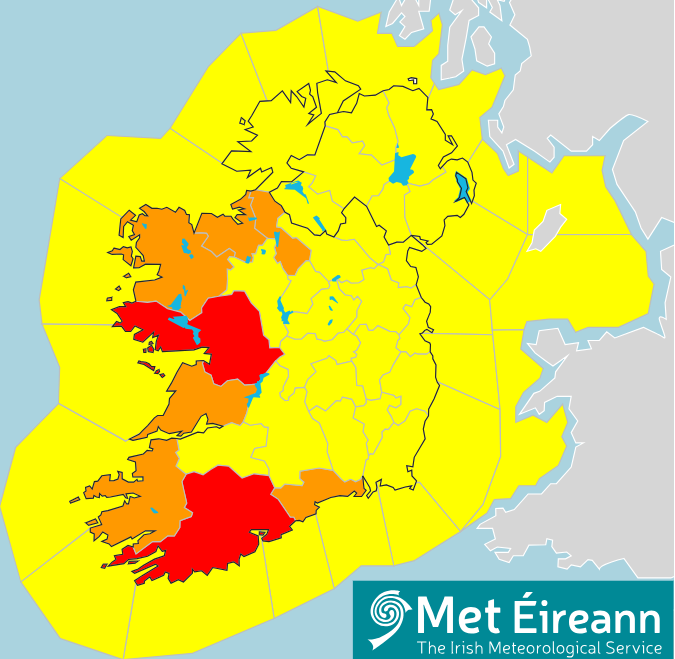
The new system will allow Met Éireann to issue weather warnings at sub-county level, rather than applying the same warning to an entire county, as happens under the current system.
Responding to Deputy Cooney, Minister Byrne said the system was on track for delivery ahead of the next storm season. He confirmed that the technical development was already in place and that Met Éireann was carrying out independent research, including focus groups, to ensure warnings were clearly understood by the public.
Deputy Cooney had expressed concern that the delay would mean people would continue to rely on a system that does not always reflect the different weather conditions experienced within individual counties.
Highlighting the situation in Clare, he pointed to rainfall figures from October when 51mm of rain fell in Moyasta in West Clare in the 24 hours to 4pm on October 24, compared with 23mm in Newmarket-on-Fergus during the same period.
Despite the significant difference in rainfall, Clare received a Status Yellow warning while Cork, Kerry and Waterford were placed under Status Orange warnings.
Deputy Cooney said the example demonstrated why a more localised approach was needed, particularly in counties such as Clare with a long Atlantic coastline, areas of high ground and inland communities.
He also highlighted snowfall in higher areas of Clare in November 2024, when some rural communities were cut off for several days while lower-lying areas experienced rain.
Deputy Cooney questioned why further consultation was required when the UK Met Office had operated a similar localised warning system since 2011.
Minister Byrne said the new system was already being used by Met Éireann’s forecast office on a pre-operational basis. He said the remaining assessment work was necessary to ensure the public could interpret the warnings correctly and make informed decisions during severe weather events.
He added that major changes to national weather warning systems were not introduced during the winter period because of the risk of confusion during a period when the service could be required to respond to significant weather events.
Deputy Cooney said people depended on Met Éireann warnings when making decisions about travel, protecting their homes and businesses and carrying out outdoor work.
He said the new system was particularly important for rural communities and the farming sector, where local weather conditions could have a significant impact on daily activities.
He called on the Government to ensure the work was completed within the timeframe outlined by the Minister of State and that there would be no further delays.